


Most birders treat the Adriatic as somewhere to pass through on the way to a better coast. That is a mistake. The sea is shallow, the tides barely move, and the whole shoreline is a chain of sandbars, saltpans and river mouths that funnel migrants into a strip a few hundred metres wide. You can work a beach, a dune system, a lagoon and the open sea in one day, and you can do it with a packed lunch and a pair of binoculars.
This checklist is arranged by habitat, not by site. The names change as you move from Friuli down to Puglia — Grado, Comacchio, Cervia, Margherita di Savoia — but the four habitats repeat and so do the birds. Learn the habitats and you can improvise wherever you happen to stop.
Time It Right: Wind, Light and the Shape of the Day
Adriatic tides are modest compared with the Atlantic, so you do not need to build a day around a tide table. Watch the wind instead. A cold, dry bora blowing from the north-east clears the air beautifully and can flatten the sea in the lee of the shore, which makes distant scanning far easier. A warm scirocco from the south-east brings haze that turns a scope into a useless tube by mid-morning, but it also pushes seabirds closer to land. Both have their uses.
Sea-watching pays best in the first two hours of light and the last two before dusk. Do the beach at mid-morning, while the sand is still wet and before the first lidos fill up. Save the dunes for late afternoon, when larks sing and stone-curlews start calling. In July and August, be off the open sand by eleven; the heat shimmer will beat you anyway, and there is no shade to argue with.
On the Sand: Beach and Shoreline Targets
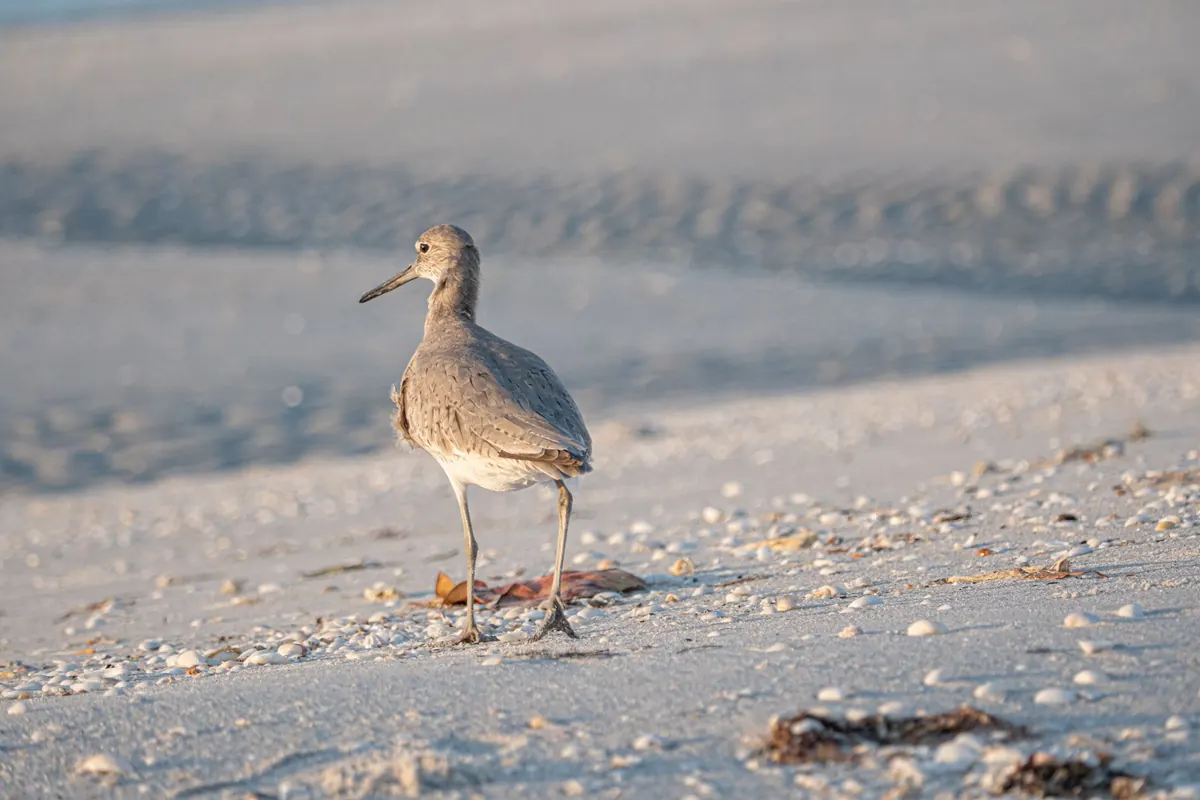
Walk the wrack line first, then the wet edge where the water meets the sand. That narrow band is where most of your day's birds will be, and most beachgoers walk straight past it. Look for:
- Kentish plover — small, pale, restless; the signature breeding bird of Adriatic beaches.
- Ringed plover and grey plover — common on passage and in winter.
- Sanderling — chasing the wash in tight, fast-running flocks.
- Dunlin, little stint and curlew sandpiper — the last two mostly in autumn.
- Ruddy turnstone — on shingle, harbour walls and rotting weed.
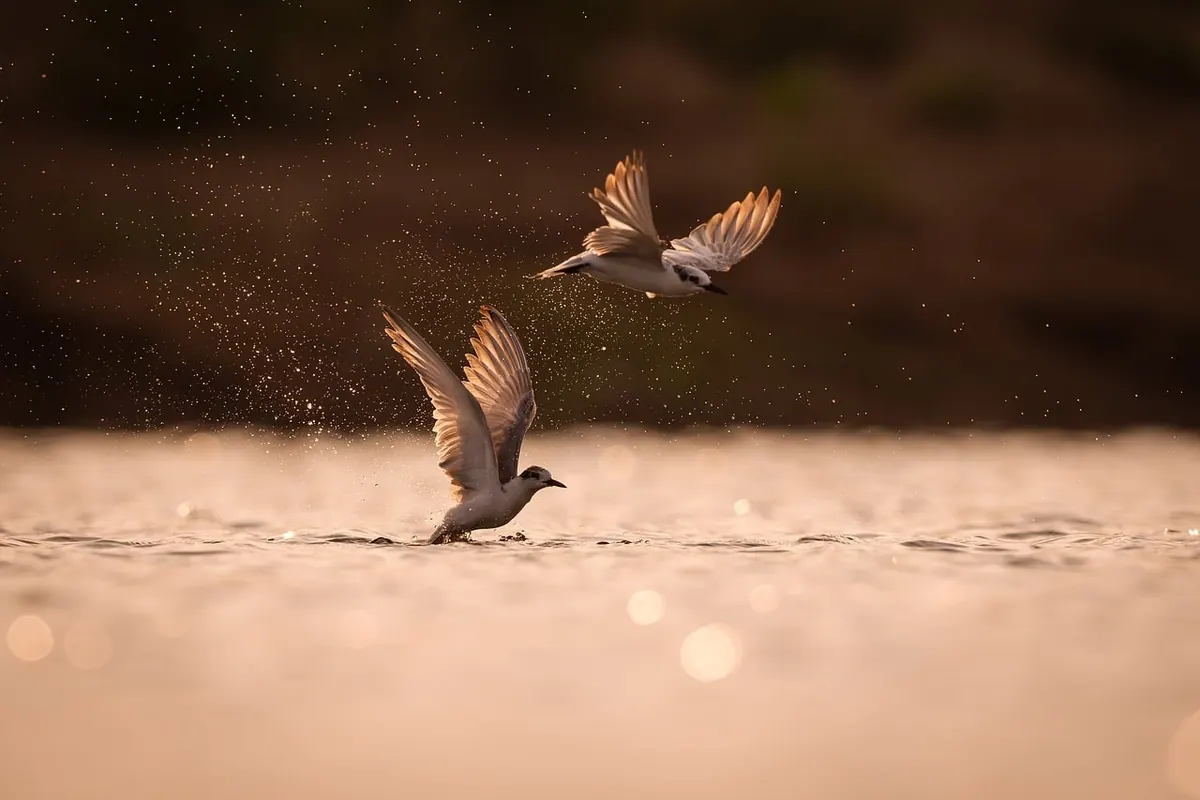
- Little tern and Sandwich tern — hovering, plunging, or lined up on a sandbar.
- Mediterranean gull — adults are unmistakable with those white wingtips.
- Yellow-legged gull — everywhere, and worth checking properly, because oddities hide among them.
- Slender-billed gull — local and scarce, mainly around the northern river mouths.
- Audouin's gull — an occasional visitor; scan resting gull flocks carefully.
Use the free stretches of beach rather than the private lidos, where rows of umbrellas and loudspeakers make birds nervous. Wherever you see rope fences or signs marking nesting areas, stay outside them; Kentish plovers and little terns nest directly on open sand, and one careless shortcut can end a clutch.
Behind the Beach: Dunes and Scrub
Step back from the water and the cast changes completely. The low, spiny scrub and dune grassland hold a different set of birds, and they are easy to miss if you never leave the sand. Listen for the dry, rattling song of the short-toed lark, a real Adriatic speciality, and for the fluty, melancholic notes of the crested lark. Tawny pipits perch on fence posts and dead stems, while stone-curlews call after dusk from stony fields just inland.
In spring and early autumn the scrub fills with passage birds: red-backed shrikes, whinchats, common redstarts, and the occasional hoopoe or low-passing bee-eater flock. Stay on the paths. Dune vegetation is fragile, and the sand itself is a nesting surface, not just a substrate.
The Lagoons: Where the Adriatic Puts on Its Best Show
If you only have time for one habitat, choose the lagoon. The shallow brackish basins behind the coast — Grado and Marano in the north, Comacchio and Cervia in the middle, Margherita di Savoia in the south — hold birds in concentrations that feel almost unfair. Scan from an embankment with a scope and let the pan fill up.
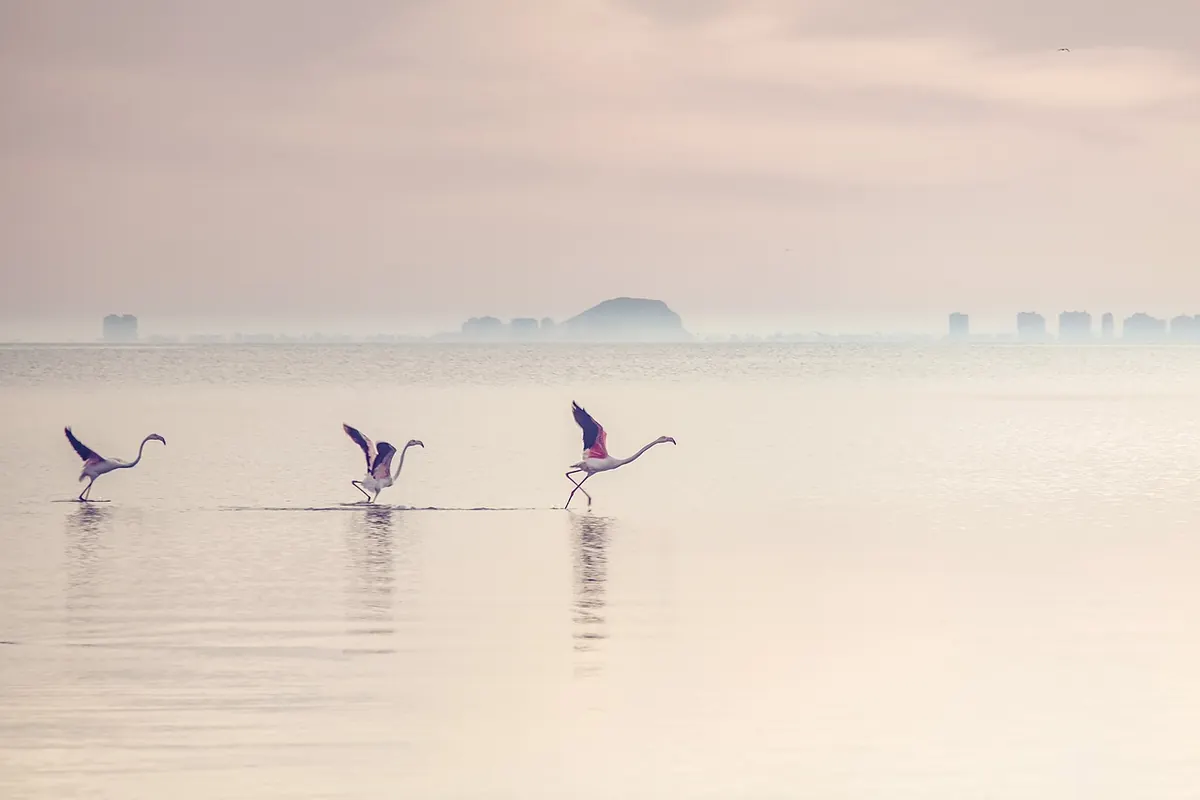
- Greater flamingo — now a year-round fixture in several basins.
- Black-winged stilt and pied avocet — nesting on the islands and saltpan edges.
- Spoonbill and glossy ibis — often in loose feeding groups.
- Little egret and great white egret — the former everywhere, the latter increasing.
- Marsh harrier — quartering low, especially early and late.
- Shelduck, teal, wigeon, pintail and pochard — winter numbers build from November.
- Pygmy cormorant and ferruginous duck — genuine specialities of the Po delta wetlands.
- Kingfisher, Cetti's warbler and bearded reedling — more often heard than seen.
Winter is the easiest season here: flat grey light, no haze, and birds packed tightly. In summer, work the edges at dawn and then find a shaded bank to sit on.
Scanning the Open Sea
Seawatching on the Adriatic is not the spectacle it is on the Atlantic, but it rewards patience. Find a headland, a harbour mole or the end of a breakwater, get comfortable, and scan in blocks of fifteen minutes: first the horizon, then the middle distance, then the water just offshore. Scopoli's and Yelkouan shearwaters are the classic targets, more reliable the further south you go, arcing low over the water on stiff wingbeats. Northern gannets are scarce but regular in winter, and great and pomarine skuas turn up on passage.
Watch for little gulls picking insects off the surface in winter, and for divers and grebes resting on calm water close in. A spell of onshore wind after a blow is the best excuse to drop everything and go and stare at the sea for an hour.
What Changes Through the Year
- March to May — passage at its peak; terns, waders and passerines moving through, breeding plumage at its best.
- June to July — nesting season; quiet on the sea, busy on the sand, and the heat dictates an early start.
- August to October — the richest period for waders and passerines, with the first wildfowl arriving.
- November to February — lagoon and open-sea season; wildfowl, grebes, divers and gulls in numbers, with almost no crowds.
Practical Notes for the Day
Take an 8x42 binocular and, if you own one, a telescope — the lagoons are unwatchable without it. Add sun cream, a hat, more water than you think you need, and footwear that can handle soft sand and muddy embankments; there is very little shade along this coast. A small notebook is worth more than any app when you are trying to work out whether the flock on the third sandbar is the same one you counted an hour ago.
Keep your distance from nesting colonies, leave the drone at home, and keep dogs off the sand in spring and summer. Beach-cleaning machines and uncontrolled access do real damage to ground-nesting birds, so it is worth checking whether the stretch you plan to visit sits inside a reserve with its own rules and access restrictions before you set off. Bird the edges, carry your rubbish out, and the Adriatic will keep giving you good days for years.
Photo: Arian Fernandez / Pexels