

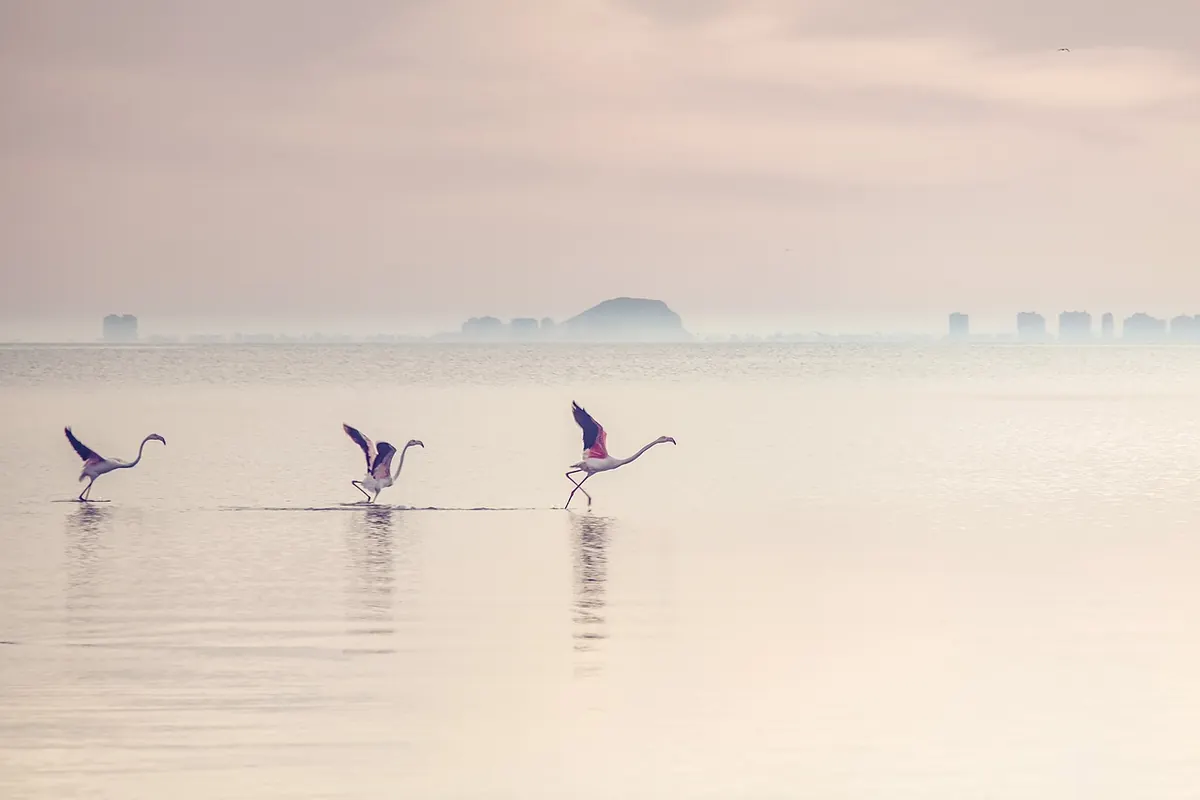
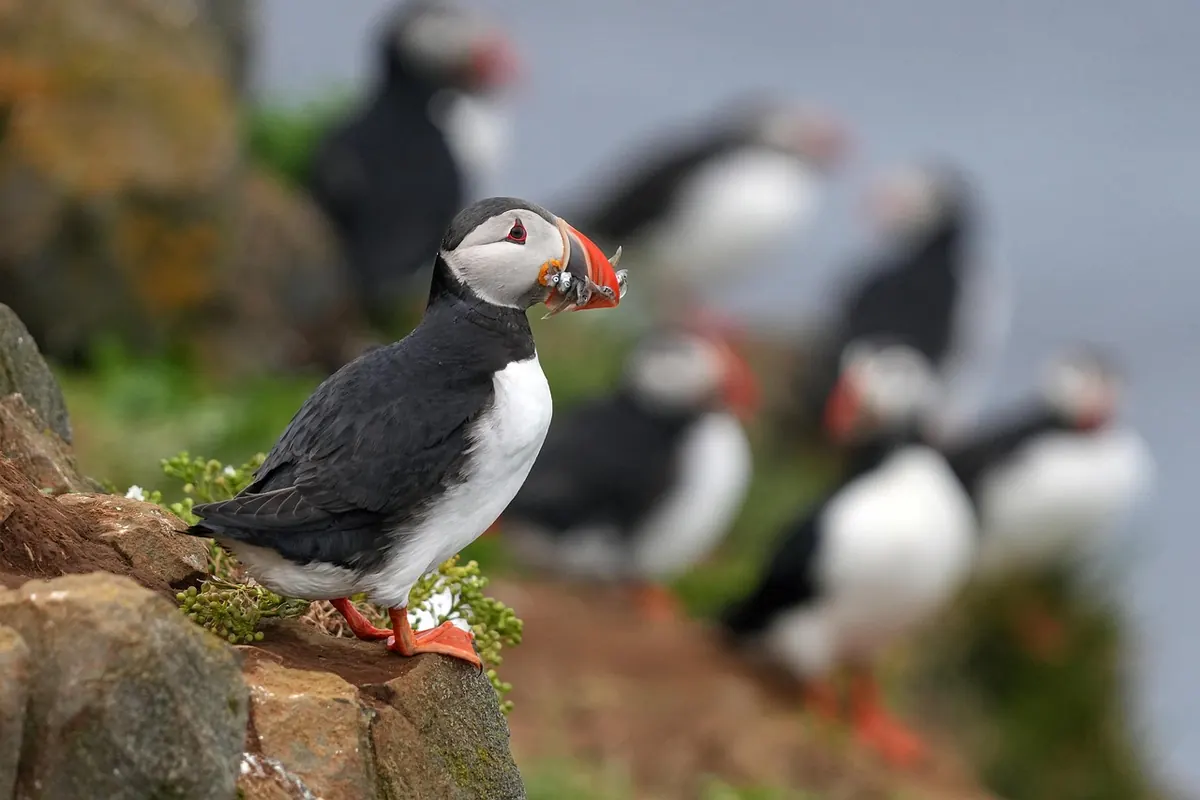
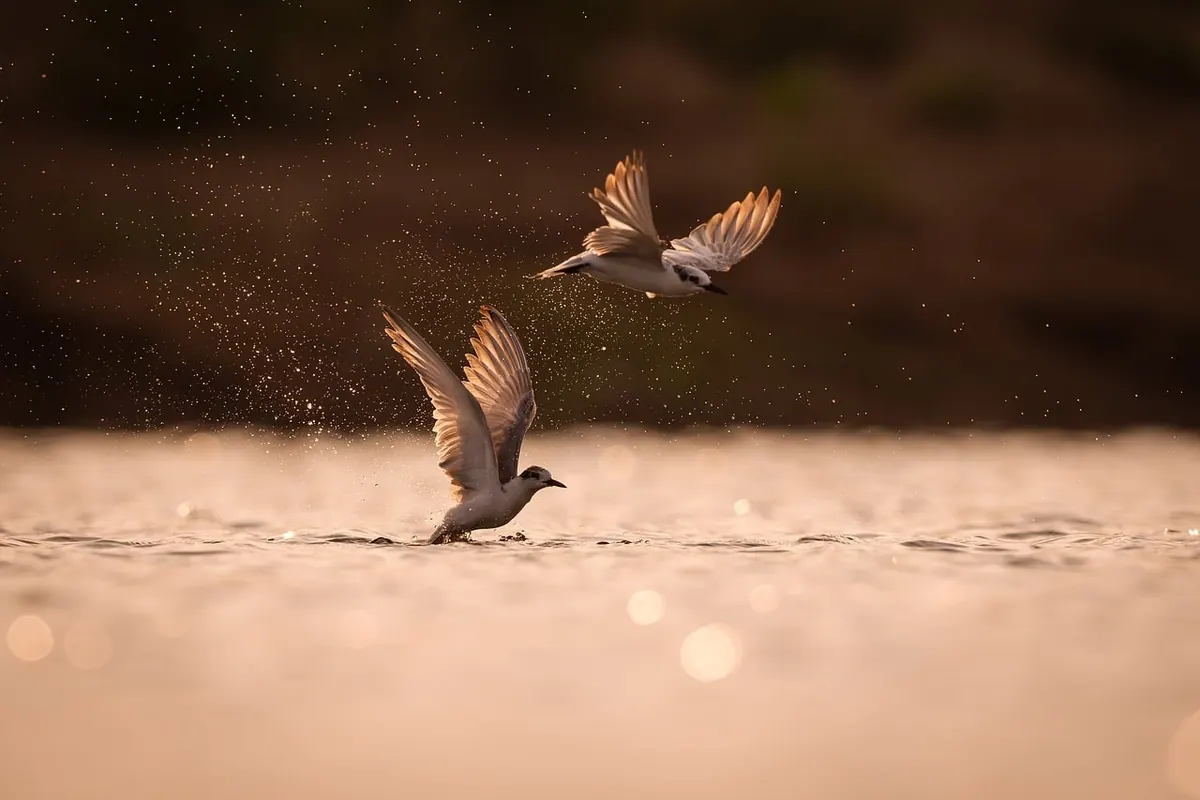
The path tops out on a headland and the noise arrives before the birds do: a wall of kittiwake chatter, the dry rattle of guillemots, the ammonia smell drifting up from the ledges. You have maybe forty minutes of soft light left. Everything in you wants to step closer, change lenses, get the frame. That pause — the one between wanting the picture and taking it — is where most of the ethics of seabird photography actually live. Colonies are extraordinary places and they are also nurseries: crowded, loud and, from the birds' point of view, permanently under siege. A checklist run before you leave the car park makes the right choices easier when the light turns gold and your judgement is compromised by excitement.
Check the Colony's Calendar Before You Check the Weather
Species timing varies enormously with latitude and location, so the first thing to do is ask. Reserve wardens, ringers and local bird clubs know when each colony's season peaks, and a two-minute conversation at a visitor centre can save you from turning up in the worst week of the year.
Broadly, though, the pattern holds. Early season is prospecting and courtship: birds are still deciding where to commit, sites are not yet fixed, and disturbance can push pairs elsewhere. Then comes incubation and small chicks, when adults are swapping shifts on eggs and tiny young, and a flushed bird leaves its nest exposed to gulls, corvids and cold. This is the window that demands the most restraint. Late season is quieter — chicks are large, many adults have gone — but juveniles on cliffs are still clumsy and still easily panicked.
Weather matters as much as date. On cold, wet or windy days, every unnecessary flight costs a bird energy it cannot spare. If the forecast is grim, stay home and go through your files instead. And resist the urge to visit the same colony every day: repeated, predictable human presence does more cumulative harm than one careful visit.
Distance Is a Behaviour Question, Not a Number
There is no universal metre count, whatever the internet says. A puffin on a flat, well-visited island may tolerate a photographer at ten metres; a fulmar on an undisturbed cliff may be agitated at forty. Watch the bird, not your shoes.
If a bird has stopped what it was doing to watch you, you are already too close.
Learn the early signs. Heads turning away from eggs. A rise in call rate. Gulls lifting and circling. Terns hovering overhead, ready to dive. An adult returning to the nest, then sheering off again and again. Any of these means back off slowly, low, without sudden movement, and give the bird a clear line to the sea.
Long lenses are the honest solution: a 400–600mm reach and a willingness to crop beats creeping forward every time. Better still, use what the site gives you — a designated hide, a boulder to sit behind, a wall, a bank of sea thrift that lets you break your outline. Approach in stages and sit still for a while; birds settle faster than you expect when you stop being an event. Never stand on the clifftop directly above a ledge colony, and never position yourself between nesting birds and the water.
Work the Light, Not the Subject
The best light near a colony is the light that lets you stay put. That means early morning and the last couple of hours before dusk, when the sun is low, the colour is warm and the birds are busy rather than restless. Midday sun on a tall cliff face brings heat haze, harsh shadows and blown-out white plumage on gannets, kittiwakes and gulls — expose for the highlights and let the darker rock fall away.
Backlight is your friend for flight shots: rim-lit wings against a dark cliff or a grey sea look far better than a flat, front-lit portrait. Overcast days give you detail and even tones and are ideal for plumage work. What you should not do is add light. Flash near a colony causes panic flushes, and at night, on storm petrel colonies or burrow nesters, even a single burst can make birds desert a nest site. If you are out with a licensed guide, follow their protocol exactly; otherwise, leave the flash in the bag.
Three Nesting Situations, Three Sets of Manners
Cliff nesters
Kittiwakes, guillemots, razorbills and fulmars nest on ledges and in crevices. They are best photographed from below, from a boat or from an established viewpoint across a bay. Keep your silhouette off the skyline, don't drop anything over the edge, and give fulmars real space — a stressed bird may eject oil, and it does not come out of clothing.
Ground nesters
Terns, gulls and oystercatchers nest on shingle, machair and dune. These are the colonies most easily ruined by a single pair of boots. Stay on marked paths, never cross a roped area, and accept that terns will dive at your head. That is not aggression to be photographed; it is a warning to retreat.
Burrow nesters
Puffins, Manx shearwaters and storm petrels raise young underground. Burrows collapse. Keep tripod legs, bags and knees off grassy slopes where burrows are likely, and never dig, probe or enlarge an entrance to get a better angle.
Leave No Trace at the Colony Edge
Most of this is ordinary hillcraft, applied with extra discipline because colonies concentrate everything that can go wrong.
- Stay on paths and boardwalks; dune and cliff vegetation is fragile and hides nests.
- Take everything out, including lens caps, cable ties, sandwich wrappers and stray hair ties.
- Never move rocks, eggs, chicks or vegetation for a cleaner composition.
- Do not handle birds or chicks, even ones that look abandoned.
- Keep well clear of fences, closed areas and seasonal signage — the closure is the advice.
- Do not use playback near a colony; recorded calls provoke territorial responses that cost birds time and energy.
- Fly drones only with explicit permission, and usually not at all; they are widely restricted and reliably disturb birds.
- Keep dogs away entirely, on lead or in the car.
- Think before you publish coordinates. Nest locations shared publicly can be found by people with worse intentions than yours.
One more point worth checking before you travel: in many countries seabirds are legally protected, and disturbing them — including at the nest — can be an offence. Rules differ by place and by species, so confirm what applies locally with the reserve, the landowner or the national wildlife agency rather than assuming.
When Someone Else Gets Too Close
It will happen. A group will walk straight through a roped area, or a photographer will walk towards a nest with a phone out. Keep it short, calm and specific: "There's a nest about three metres in front of you — could you step back towards the path?" People generally comply when they understand the reason. Save your irritation for the report to the warden afterwards, and never escalate in front of the birds; a shouting match at a colony edge is worse than the original mistake.
Five Minutes Before You Raise the Camera
- Am I in a permitted place, on a path, with no closure in force?
- Which species is in front of me, and what stage of the season is it in?
- Can I reach this frame with the lens I have, without moving closer?
- Is there a screen, bank or hide I could use instead of standing in the open?
- Is the sun behind me or behind the bird, and will flash stay off?
- If every bird here flushed right now, what would I be responsible for?
Run those six questions and you will usually find that the shot you wanted is available from where you already stand, with a longer lens and a little patience. Go slowly, sit down, let the colony forget you, and the photographs get better anyway. The birds will still be there next spring — which is the only measure of a good day out that really counts.
Photo: makabera / Pixabay