




Two birds cross the mouth of an estuary, heading away from you into a hard grey sky. Both are pale underneath and grey above, both carry some black around the head, and both are climbing fast. One is a tern, one is a gull — and if you wait for a colour detail you will lose the bird before you have decided. The separation is there, though, and it shows up long before any plumage character does. Learn to read shape and movement first, and a distant bird stops being a guess.
Start with the silhouette, not the colour
A tern at range looks like a slender cross with a long tail. The wings are narrow, pointed and set far forward on a compact, almost torpedo-shaped body. The head is small, the bill projects like a needle, and the legs barely register, because they are short and tucked tight. Some species add long tail streamers that flick and trail behind, giving the whole bird a slightly unbalanced, elegant look — as if it were drawn with a finer pen than everything around it.
A gull, by contrast, is built for carrying weight. The chest is full, the body long, the wings broad with rounded tips and a pronounced bend at the wrist. The tail is square or rounded, never streamered. The legs are long enough to be noticeable, often trailing behind in flight, and the bill looks like a sturdy tool rather than a dart.
Try a simple test on any bird you cannot identify. Cover the body with your eye and look only at the wing outline. Long, narrow, sharply pointed wings on a short body point towards tern. Broad, broad-based wings with rounded tips on a heavier body point towards gull. Then check the tail: a deep fork or trailing streamers is a strong tern signal. A neat fan or square end is almost always a gull.
Flight style: buoyant rowing versus stiff gliding
Movement usually settles the question faster than shape does. Terns fly with a rowing action, deep elastic wingbeats that seem to come from the shoulder, and the bird rises and falls on its own effort. There is a lightness to it — a bird that appears to be hanging from its wings rather than being pushed along by them. When feeding, a tern hovers with quick, quivering beats, drops its feet, and plunges into the water from a height.
Gulls are stiffer. Their typical rhythm is a few deep flaps followed by a long, flat glide, and they are happy to do nothing but soar along a headland or hang on the wind. Their wingbeats look rigid and deliberate, with less give in the wing. A gull working a harbour will patrol, dip, and pick; a tern will climb, hover, and hit the water.
There is an exception worth knowing: the kittiwake is a small gull that has adopted a tern-like life on cliffs, with pointed wings and light, flicking flight. It still has black wingtips, no fork in the tail, and a short yellow bill — so use the whole bird, not one character.
Bills, heads and legs — the close-range confirmations
The bill
Bill shape is the most reliable single feature once the bird is in reasonable light. Terns have straight, tapering, sharply pointed bills, often longer than the head. Look at a common tern and the bill reads as a thin red needle with a black tip; a Sandwich tern carries a black bill with a pale yellow tip; an Arctic tern has a shorter, deeper red bill. All of them are built for snatching fish from just below the surface.
Gull bills are heavier, slightly hooked at the tip, and often show a marked angle on the lower edge. They are general-purpose: good for fish, carrion, chips, and the contents of an unattended bag. A herring gull's bill is a crowbar. A tern's is a pair of tweezers.
The head and legs
Breeding terns generally wear a full black cap that reaches down to the eye, and many show a white forehead in winter. Their legs are short and set back, so a standing tern looks low to the ground, as though it were resting on its belly. Gulls stand tall on longer legs and have larger, more obvious feet. When birds are roosting, this difference in posture is often enough: terns sit in tight, low clusters on sand or shingle, while gulls space themselves out on posts, roofs and open mud.
Behaviour: what each bird does with its time
Feeding
Terns are specialists. They hunt by hovering and plunge-diving, and they frequently carry a single fish crosswise in the bill, heading back to a colony. If you see a pale bird repeatedly hovering over open water and dropping in with a splash, you are almost certainly watching a tern.
Gulls are opportunists. They pick from the surface, upend like ducks in shallow water, follow boats and trawlers, patrol rubbish tips, and spend a lot of time simply waiting. They also steal — from each other and from other species — so a sudden swirling commotion over a harbour is more likely to involve gulls than terns.
Resting and calling
Terns are noisy and sociable, with harsh, rasping calls that carry a long way and often reveal a bird before you see it. Gulls are vocal too, but the familiar mewing and laughing notes are lower and more rounded. Resting terns face into the wind in dense, tidy groups on open ground; gulls seem to prefer height, or at least a clear line of sight.
When the cues mislead
Late summer is the awkward season. Juvenile terns hatch brown and scaly above, without the clean grey and white of adults, and a distant bird on a flat calm sea can look remarkably gull-like. Watch the movement instead: the rowing flight, the fine bill, the fork in the tail. Then check the wings, which remain long and narrow even on young birds.
Light does the rest. Against a bright overcast, a bird two hundred metres away becomes a silhouette with no detail at all, and heat haze over a beach flattens shape into a smudge. In those conditions, resist identification. Move so the bird is side-on, use a scope if you have one, and let it come closer. A record shot of a shape you cannot read is worth more than a confident guess you cannot defend.
A six-point field check
- Outline: slender body and narrow pointed wings = tern; heavy body and broad wings = gull.
- Tail: forked or streamered = tern; square or rounded fan = gull.
- Flight: elastic rowing and hovering = tern; flap-and-glide and soaring = gull.
- Bill: straight needle = tern; stout with a slight hook = gull.
- Legs: short and barely visible = tern; longer, often trailing = gull.
- Habit: plunge-diving and carrying fish crosswise = tern; patrolling, picking and scavenging = gull.
Practising at your local patch
Pick a spot with a mixed roost — a harbour wall, an estuary sandbank, a beach at low tide — and go when the light is behind you. Choose one bird and work the characters in a fixed order: silhouette, tail, flight, bill, then behaviour. Say the order out loud the first few times; it stops you from jumping to colour and it builds a habit that holds up when a bird is moving fast.
Spend a session deliberately misidentifying things. Look at gulls and describe what makes them tern-like, then look at terns and describe what makes them gull-like. That is the exercise that trains the eye. Keep notes on the weather and distance for each bird you were unsure about, and revisit the same patch in a different season — the juvenile terns of August will teach you more than the adults of May.
Take your time, work the shape before the detail, and let the birds tell you what they are doing. Distance stops being an obstacle once you are reading movement instead of plumage.
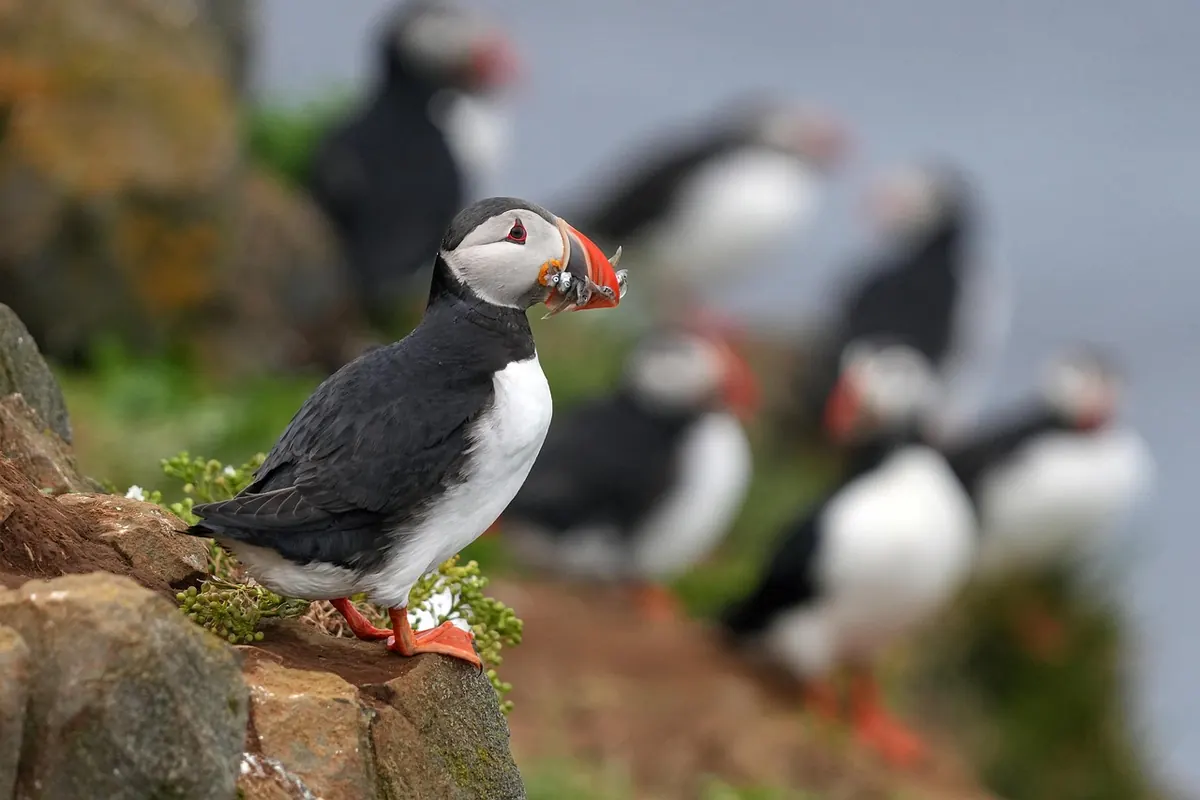
Photo: bitnikgao / Pixabay