


Coastal birdwatching rewards patience and punishes eagerness. A beach looks open and forgiving — wide horizon, plenty of room, nothing between you and the birds — and that is precisely why people walk a little too close, speak a little too loudly, and watch a roosting flock lift off in a clatter of wings. The birds pay for that in energy they can ill afford to spend. The good news is that almost every mistake below is cheap to fix and has little to do with gear. It comes down to habits, and habits can be changed in a single morning on the shore.
Getting Too Close, Too Quickly
There is no universal safe distance. A curlew on a quiet estuary may lift off at eighty metres; a sanderling on a busy promenade may let you pass within ten. What matters is the bird's response, not your intention or the length of your lens.
Learn the early warnings. A head coming up from feeding. A stiffened neck. A bird turning its body away from you. A single wing-flick. A soft call that ripples along the flock. Sudden silence where there had been a low chatter. None of these mean the birds are relaxed — they are the last few steps before a flush.
Why a flush is not a small thing
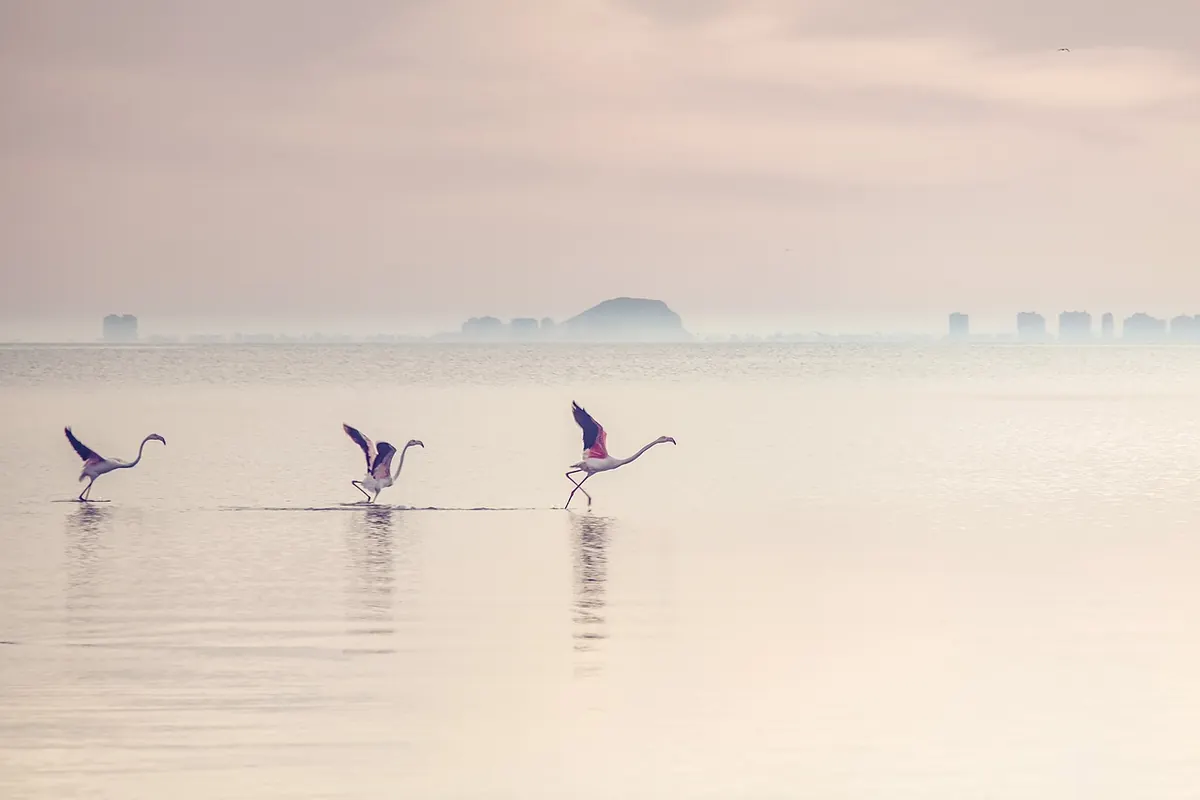
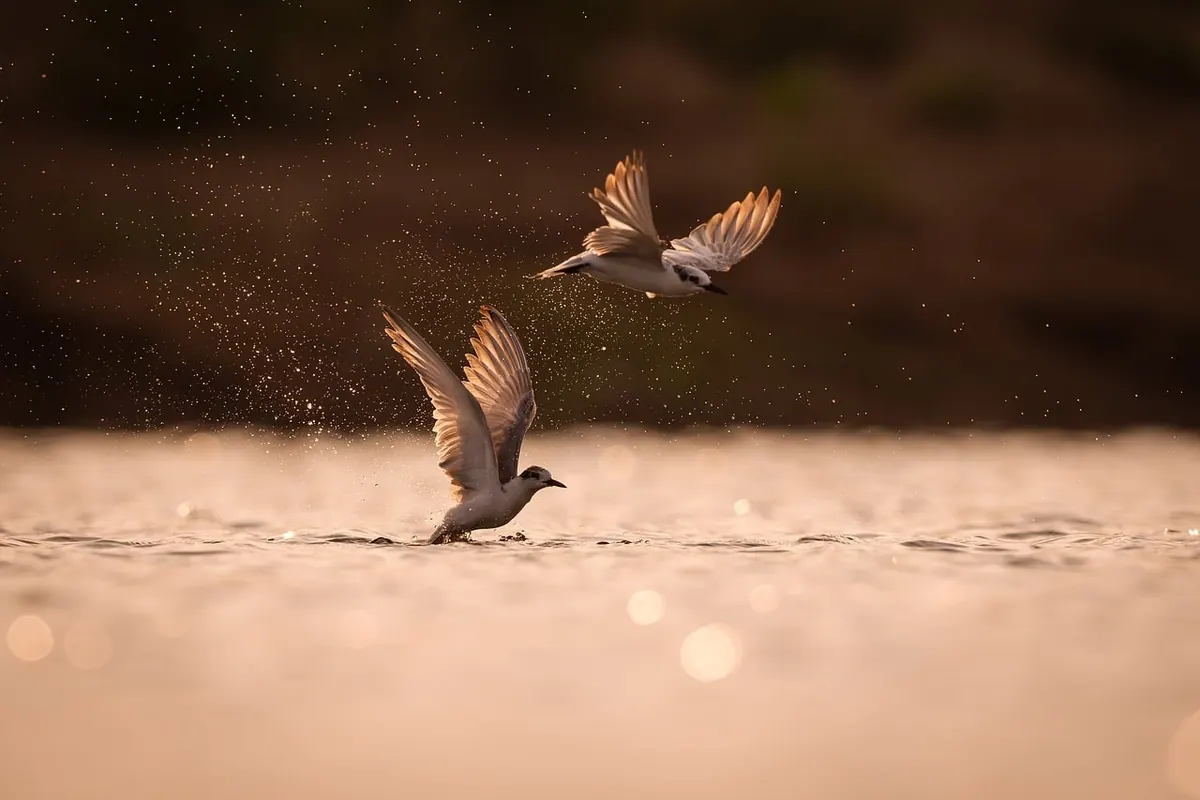
When a flock lifts, every bird burns fuel it may have been saving for migration, for keeping warm through a cold night, or for sitting tight on a nest. The birds circle, call, and settle somewhere further along the shore — often on a poorer feeding patch, or squeezed into a smaller roost with more competition. Do that two or three times in a morning and you have effectively pushed the flock off the best part of the beach.
What to do instead
- Use optics rather than your feet. A scope on a tripod forty metres back shows far more detail than a phone held at five.
- Approach at an angle, never head-on, and pause every few steps.
- Drop your profile. Kneeling or crouching behind a ridge of shingle is far less alarming than a walking human.
- Use cover: dune grass, rocks, driftwood, a fence line, even a moored boat.
- Stop dead the moment a bird looks up. Stay still, let it settle, then decide whether you really need another two metres. Usually you do not.
Two places deserve extra care. High-tide roosts, where waders pack together on the last dry ground, are the most vulnerable birds on any coast — pushing a roost apart at high water leaves birds with nowhere to rest. And beach-nesting species such as ringed plover, oystercatcher and little tern lay eggs on open sand and shingle that are almost invisible. Stay on marked paths, respect rope fences, and keep dogs close and under control during the nesting season. A quick look inside a roped area can end a clutch.
Bright Clothing and Flapping Fabric
White is the worst offender on a shoreline: white trainers, a white waterproof, a white cap. Add neon orange, scarlet or high-visibility yellow and you become the most conspicuous object on a beach of grey, buff and olive. Birds are tuned to things that stand out.
Muted mid-tones do the job — olive, khaki, grey-green, brown, slate blue, dark denim. You do not need full camouflage; stillness and a low profile matter more than any pattern. What does matter is noise and movement from your clothing. A waterproof that rustles like a crisp packet, a Velcro cuff opened at the wrong moment, a swinging camera bag or a loose strap flapping in the wind will undo a careful approach faster than colour ever will.
So wear soft, quiet fabrics, cinch your bag close to your body, tape or tuck loose straps, and take off any crackling outer layer before you settle in to watch. Comfortable, quiet footwear is worth more than another lens.
Noise Carries Further Over Water
Sound travels across open water and wet sand in a way that surprises people. A normal conversational voice at two hundred metres can be enough to put a flock on edge; a car door slammed in a car park above a bay can clear the beach before you have even unpacked your binoculars.
Some fixes take a minute of forethought:
- Keep talk to a minimum, and keep it low. Agree hand signals for "bird here" and "move back" before you set out.
- Close car doors gently, and park away from the water's edge rather than beside a roost.
- Check your kit at home for rattles — loose tripod clamps, a swinging tripod hook, keys in a pocket, a zip that jingles.
- Put the phone on silent and switch off camera beeps and fake shutter sounds.
- If you do make a noise, freeze rather than hurry away. Wait for the flock to relax before you move again.
- Keep dogs on a lead wherever birds are feeding, roosting or nesting, and never let one run at a roost.
Wind direction is your friend. Approaching from downwind carries your sound and scent away from the birds, and it usually gives you a better view of them facing into the breeze.
Flash, Burst Mode and the Perfect Frame
Photographers scare more coastal birds than anybody else, and almost always in the same three ways. The first is flash — fired at dusk at a roosting flock, or worse, at night. A sudden burst of light is startling at close range and completely unnecessary at any range where the picture is worth taking. Switch it off near birds and leave it off after dark.
The second is continuous high-speed shooting. A long burst next to a resting flock sounds like something rattling in the grass, and birds respond to it. Use single frames around roosts and nests, and use a silent shutter if your camera has one. The third is the pursuit of the eye-level shot: walking into the middle of a flock and lying down among the birds. It gets a striking image and costs the flock its resting time. Work the edge of the flock's tolerance instead, with a long lens, and let the birds come to you.
If a bird has stopped feeding to look at you, the photograph is already about your presence rather than its behaviour.
Drones: The Fastest Way to Clear a Beach
A drone arrives from above and hums — close enough to the profile of a predator that birds react to it more strongly than to a person on foot. Colonies, nesting terns, and roosts on sandbars or spits are the worst places to fly, and even a high pass can put birds up.
Before you launch, check the rules for the site. Many coastal reserves, protected areas and nesting zones restrict or prohibit drone use outright, and shorelines often sit near airfields or other restricted airspace. Site notices and reserve staff are the quickest source of truth; where rules differ, follow the strictest one that applies.
In practice: launch well away from bird concentrations, keep the flight path clear of roosts, colonies and nesting habitat, and never steer towards a flock for a closer frame. If birds lift, call, or turn their heads upwards, land the drone and move away. Chasing a bird with a drone is not a photograph worth having.
A Short Checklist Before You Walk Out
Most of this fits in a sentence: put the birds' needs ahead of your list, and the birds will give you better views than a hurried approach ever will.
- Dull colours, quiet fabric, nothing flapping.
- Phone silent, tripod tight, car door closed gently.
- Stop at the edge of the flock's comfort and use the scope.
- Kneel, pause, approach at an angle, use cover.
- Flash off, single frames near resting birds.
- Check site rules before flying anything.
Try it on your next coastal walk: pick one flock, sit down at a distance that feels almost too far, and simply wait. Within ten or fifteen minutes the birds will drift back to feeding, and you will see preening, disputes over a patch of mud, and the small, unglamorous behaviours that never appear in a hurried morning. That is the real reward of coastal birdwatching — not the closest view, but the longest one.
Photo: OliveiraTP / Pixabay